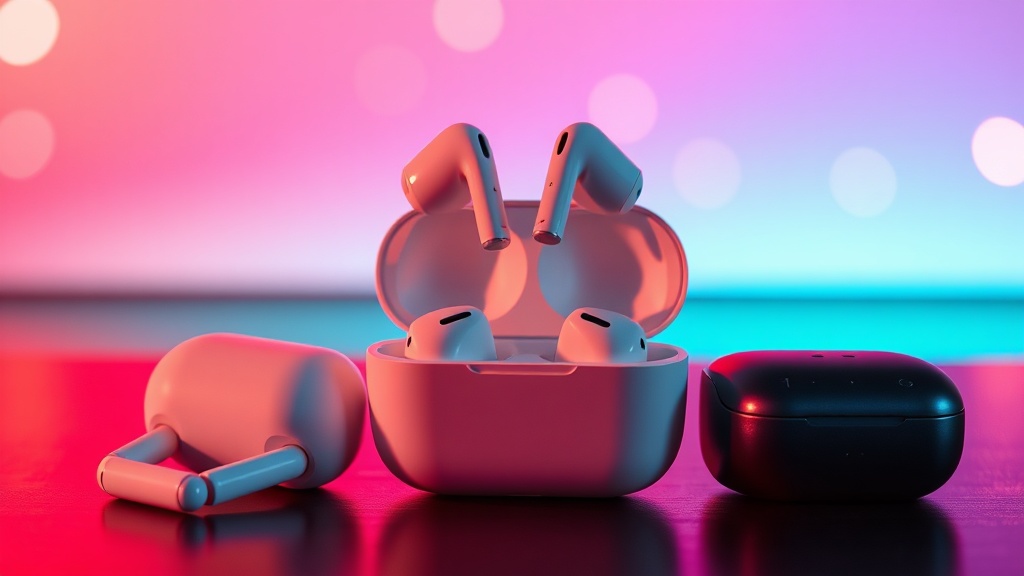
Which AirPods Should You Buy in 2026? A Complete Comparison Guide

What This Guide Covers
The AirPods lineup has grown from a single wireless earbud to four distinct models, each targeting different needs, budgets, and use cases. Whether you're replacing aging AirPods Pro 2 or buying your first pair, this guide cuts through the marketing noise to match the right model to your actual lifestyle. No fluff. No fanboy hype. Just the facts.
Apple's current lineup includes the AirPods 4, AirPods 4 with Active Noise Cancellation, AirPods Pro 2 (now with USB-C), and the premium AirPods Max. Each brings something different to the table—and each has legitimate drawbacks worth considering before you hit "buy."
Which AirPods Are Best for Daily Commuters?
The AirPods Pro 2 remain the best choice for commuters who need reliable noise cancellation in compact, pocketable form.
Commuting is where ANC (Active Noise Cancellation) proves its worth. The Pro 2's H2 chip processes noise 48,000 times per second, adapting to your environment in real time. Train rumble, bus engines, office chatter—they all fade into background static. The transparency mode (when you need to hear announcements) is still the best in the business, letting sound in without that underwater quality cheaper earbuds suffer from.
The fit matters too. The Pro 2 ships with four sizes of silicone tips—XS through L—so most ears find a seal. That seal is critical. Without it, ANC becomes a suggestion rather than a feature. The fit test in iOS Settings helps you find the right size, though some users with irregular ear canals may still struggle.
Battery life sits at 6 hours with ANC on, 30 hours total with the case. That's solid for most commutes, though longer-haul travelers might want the over-ear AirPods Max instead.
The catch? The Pro 2 launched in 2022. A refresh is expected in late 2026 with potential health tracking features. If you're on the fence, waiting might pay off—or you might enjoy two years of great audio while others hold their breath.
What's the Difference Between AirPods 4 and AirPods 4 with ANC?
The standard AirPods 4 cost $129 and offer open-ear design with no noise cancellation, while the $179 ANC version adds active noise cancellation, transparency mode, and wireless charging—for a $50 premium that's worth it for most buyers.
This is where Apple's 2024 redesign gets interesting. The AirPods 4 represent the first meaningful update to the standard AirPods since 2019. The new acoustic architecture delivers noticeably better sound than the AirPods 3, with clearer mids and less muddiness in busy tracks. The open-ear design means no silicone tips—great for users who hate the "stuffed ear" feeling, not so great for noise isolation.
Here's the thing about the ANC version: it's impressive what Apple squeezed into an open-ear design, but it's not Pro-level cancellation. The ANC works by countering external noise through the speaker, but without a physical seal, some sound inevitably leaks in. Low-frequency rumble—think airplane engines or subway tracks—still gets through. Higher-pitched sounds like conversations get dampened but not eliminated.
The $179 model also adds wireless charging (Qi and MagSafe), while the base model requires a Lightning cable. Given that most iPhone users now have MagSafe chargers, this alone might justify the upgrade.
For the budget-conscious, the standard AirPods 4 are perfectly capable earbuds. They pair instantly, sound decent, and handle calls well. But the ANC version bridges the gap toward Pro territory without the full $249 price tag.
Are the AirPods Max Still Worth $549 in 2026?
For audio purists and frequent flyers, yes—the AirPods Max deliver the best sound and noise cancellation in Apple's lineup, though the price remains hard to justify for casual listeners.
The AirPods Max launched in 2020 to mixed reactions. The sound quality impressed. The price shocked. Six years later, they still sit atop Apple's audio hierarchy, even as competitors have caught up in some areas.
Let's start with what they do well. The computational audio powered by Apple's H1 chip (dual, one per ear cup) creates a spacious soundstage that rivals $400+ audiophile headphones. The ANC remains class-leading—better than the Pro 2 in sheer isolation, though the gap has narrowed. The aluminum and mesh knit construction feels premium in ways plastic competitors don't.
But there's baggage. The Smart Case (really a sleeve) doesn't actually protect much. The weight—384 grams—becomes noticeable during long sessions. And the Lightning port (since updated to USB-C in the 2024 refresh) felt dated even before the change.
For desk workers, remote professionals, or anyone who wears headphones 4+ hours daily, the AirPods Max excel. The memory foam ear cushions distribute pressure well. The headband mesh reduces the clamping force that causes headaches on other over-ear models.
The real question: do you need them? If you're listening in quiet environments, the sonic advantages over the Pro 2 are subtle. If you're moving constantly, the bulk becomes annoying. But for that specific user who wants the absolute best Apple offers—regardless of cost—the Max still deliver.
The Smart Case Problem
One persistent complaint deserves mention. The AirPods Max don't power off in any traditional sense. They enter a low-power mode when placed in the Smart Case, but remove them without the case and they'll sip battery for days. Apple claims this preserves the "always ready" experience. Users claim it's poor design. Both are right.
AirPods Comparison Table
| Feature | AirPods 4 | AirPods 4 (ANC) | AirPods Pro 2 | AirPods Max |
|---|---|---|---|---|
| Price | $129 | $179 | $249 | $549 |
| Design | Open-ear | Open-ear | In-ear (silicone tips) | Over-ear |
| Active Noise Cancellation | No | Yes (adaptive) | Yes (adaptive + transparency) | Yes (adaptive + transparency) |
| Battery (earbuds) | 5 hours | 4 hours (ANC on) | 6 hours (ANC on) | 20 hours (ANC on) |
| Battery (with case) | 30 hours | 30 hours | 30 hours | N/A |
| Charging | Lightning | USB-C / MagSafe / Qi | USB-C / MagSafe / Qi | USB-C |
| Water Resistance | IP54 | IP54 | IP54 | No rating |
| Head Tracking | No | Yes | Yes | Yes |
Which AirPods Offer the Best Value?
The AirPods 4 with ANC hit the sweet spot for most users, delivering core premium features at a sub-$200 price point.
Value is subjective, but let's look at the math. The base AirPods 4 cost $129. For $50 more, the ANC version adds:
- Active noise cancellation (worth $50 alone for commuters)
- Wireless charging capability
- Transparency mode
- Adaptive Audio (blends ANC and transparency automatically)
That's significant. The jump from AirPods 4 ANC to Pro 2 costs another $70 and primarily gains you better ANC, a more secure in-ear fit, and slightly longer battery life. Worth it for some, overkill for others.
The AirPods Max exist in a different category entirely. At $549, they're competing with Sony's WH-1000XM5 and Bose's QuietComfort Ultra—both excellent headphones at lower prices. The Max win on ecosystem integration and build quality. They lose on value for money and smart features (Sony's multipoint connectivity is superior).
Refurbished and Previous-Generation Options
Here's a tip most guides won't give you: the AirPods Pro (1st gen) still pop up at retailers for ~$169. They lack the H2 chip's processing power and USB-C charging, but the ANC remains competent. For budget buyers not chasing the latest specs, they're a hidden gem—though battery degradation on older stock is a real concern.
Similarly, Apple's refurbished store occasionally stocks AirPods Max at $429. That's still expensive, but the $120 savings matter when you're crossing into audiophile territory.
What About Android Users?
AirPods work with Android, but the experience is diminished—missing features include automatic device switching, spatial audio head tracking, and the seamless pairing that makes AirPods worth the premium.
If you're on Android, look elsewhere. Samsung's Galaxy Buds3 Pro or Google's Pixel Buds Pro 2 offer comparable features with full Android integration. The AirPods' proprietary chips (H1, H2) are designed for Apple's ecosystem. Using them on Android is like buying a Ferrari and driving it in a school zone.
That said, if you split time between iPhone and Android, the AirPods work fine as basic Bluetooth earbuds on the latter. Just don't expect the magic.
Firmware Updates: The Hidden Factor
One advantage Apple maintains over competitors: long-term support. Original AirPods from 2016 received firmware updates for five years. Compare that to many Android-focused earbuds that get two years of updates—if they're lucky. This extends useful lifespan and justifies higher upfront costs.
Final Buying Recommendations
Still unsure? Here's the breakdown:
- Best for most people: AirPods 4 with ANC ($179) — balanced features, good price, no major compromises
- Best for commuters/travelers: AirPods Pro 2 ($249) — superior ANC, better fit, all-day comfort
- Best for audiophiles: AirPods Max ($549) — if money isn't the primary concern
- Best budget pick: AirPods 4 ($129) — solid basics, skip if you ride public transit daily
Worth noting: Apple typically announces new AirPods in September or October. If you're reading this in mid-2026, a Pro 3 refresh with health sensors (hearing aid features, body temperature monitoring) may be weeks away. The current lineup is mature, stable, and proven—but not cutting edge.
Choose based on how you actually use earbuds, not how you imagine using them. The AirPods 4 ANC handle gym sessions and coffee shops admirably. The Pro 2 justify their price only if you're in noisy environments regularly. The Max make sense for home offices and long flights. Everything else is marketing.