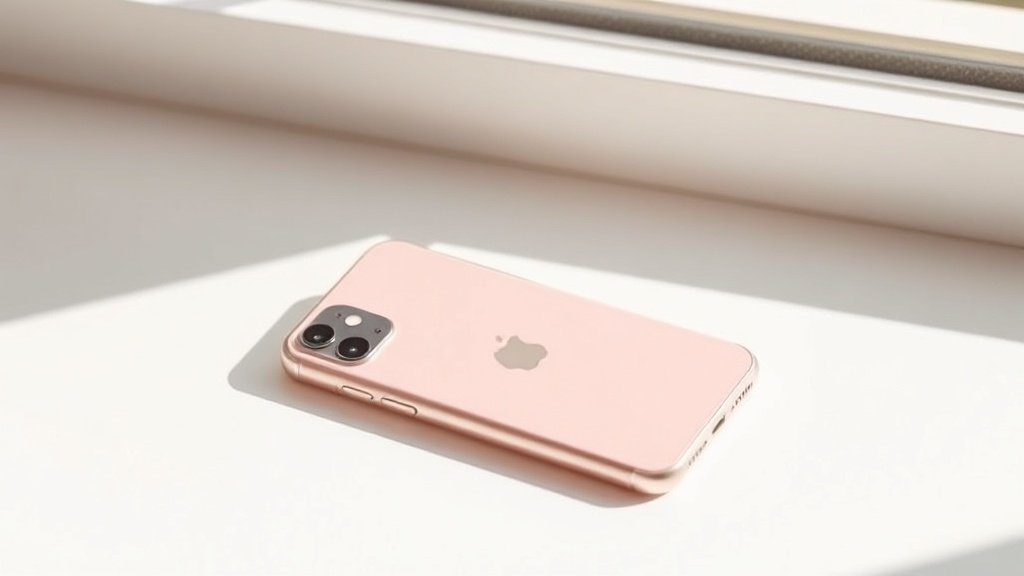
iPhone 17e Buying Guide: Who It's Actually For (And Who Should Spend the Extra $200)

The $599 iPhone that finally makes sense — and the one reason it might not be for you.
I spent five days using the iPhone 17e as my primary phone. Not because I had to — I have a 17 Pro sitting right there on my desk — but because the 17e is the phone I'd have recommended to about 70% of the customers I helped during my Genius Bar years. And I wanted to know if that instinct was right.
Short answer: yes, mostly. But there's a catch that nobody's talking about clearly enough.
First, what Apple fixed from last year
The iPhone 16e had one glaring problem: no MagSafe. Apple's reasoning was that budget buyers were upgrading from old phones and wouldn't miss what they'd never had. That logic made sense on paper and was completely wrong in practice.
I watched it play out in real time. People would buy a 16e, then discover MagSafe existed when they saw a friend's phone snap onto a car mount or a bedside charger. Suddenly their brand-new phone felt outdated. That's the worst possible feeling after spending $600.
The 17e fixes this. MagSafe is here, supporting wireless charging up to 15W. Not the 25W that the 17 Pro gets, but honestly? The difference between 15W and 25W is about 15 minutes on a full charge. You won't notice.
Apple also doubled the base storage to 256GB at the same $599 price. This matters more than most reviews acknowledge. The 16e started at 128GB, which in 2026 is genuinely tight if you shoot any 4K video or have a decent photo library. With 256GB, the storage anxiety disappears for most people.
The A19 chip is quietly a big deal
Here's a fun fact: the $599 iPhone 17e, running the A19, benchmarks faster in single-core CPU performance than the $599 MacBook Neo with its A18 Pro. Let that sink in for a second.
In daily use, the A19 means everything is fast. App launches, multitasking, Apple Intelligence features — it all runs without hesitation. The 17e doesn't feel like a budget phone in the way that term usually implies. It feels like a fast phone that happens to make trade-offs in other areas.
The A19 also improves the camera processing pipeline, giving you better computational photography — especially Apple's "next-generation portraits," which are noticeably improved over what the 16e could do. More on the camera in a moment, because that's where the story gets complicated.
The C1X modem: boring but important
Apple's second-generation cellular modem, the C1X, is up to 2x faster than the C1 in last year's 16e. In my testing around Portland, I consistently hit download speeds above 500 Mbps on 5G. That's fast enough that I stopped bothering to connect to Wi-Fi at most coffee shops — the cellular connection was often better.
Battery life is also excellent. Apple's streaming benchmark claims 21 hours, up from 11 on the iPhone 12 that many 17e buyers will be upgrading from. In real-world use, I consistently ended the day with 30-40% remaining, and that's with fairly heavy use including lots of camera testing.
Now, the camera — and the honest trade-off
This is where I have to be straight with you, because this is the one area where the $200 gap between the 17e and the regular 17 actually matters.
The 17e has a single 48MP Fusion camera with an optical-quality 2x telephoto. In good light — outdoors, well-lit rooms — it takes genuinely impressive photos. The computational photography from the A19 makes a real difference, and the next-gen portraits have that natural background blur that doesn't look obviously artificial.
But in low light, the 17e's limitations show up quickly. Dinner at a dimly lit restaurant, evening walks, indoor shots without great lighting — you'll see more noise and less detail compared to the iPhone 17. The 17e also completely lacks an ultra-wide lens, which means no 0.5x option for landscapes or group shots in tight spaces.
And here's the detail that camera enthusiasts will care about: the 17e is stuck on Apple's original Photographic Styles — just Standard, Rich Contrast, Vibrant, Warm, and Cool. The iPhone 17 and up get the second-generation styles with way more variety, finer control, and non-destructive editing. On the 17e, the style you shoot with is baked into the file. You can't change your mind later.
If you take photos primarily for social media, texts, and memories — the 17e camera is great. Better than anything you've probably used before if you're upgrading from an iPhone 12 or 13. But if photography is something you genuinely care about, spend the extra $200 for the regular 17. The camera gap is real.
What else is missing vs. the iPhone 17
I want to be transparent about every trade-off, because I think most reviews bury these in spec tables:
- Display: The 17e has a 60Hz display. The iPhone 17 has ProMotion at 120Hz with always-on display. If you've never used a 120Hz phone, you won't miss it. If you have, the 60Hz will feel slightly less fluid for the first few days — then you'll stop noticing.
- Dynamic Island vs. notch: The 17e still has the notch. The 17 has Dynamic Island. Honestly, after a week of using the 17e, I barely noticed the difference. The one time it bugged me was tracking an Uber ride while listening to a podcast — Dynamic Island makes that seamless.
- Camera Control button: The 17e doesn't have it. I kept reaching for it out of habit, but the lock screen camera shortcut works fine. This is a convenience feature, not a dealbreaker.
- Precision Find My: The 17e lacks the second-gen Ultra Wideband chip, so you don't get the precision tracking that guides you to within inches of a lost AirTag. You still get all the basic Find My features. If you're an AirTag power user, this matters. If you use Find My twice a year when you misplace your keys, it doesn't.
- Screen size: 6.1" on the 17e vs. 6.3" on the 17. Barely noticeable — the 17 achieves the bigger screen through slimmer bezels, not a bigger body.
So who should buy the iPhone 17e?
After five days of daily use, here's my honest breakdown:
The 17e is perfect if you:
- Are upgrading from an iPhone 12, 13, or anything older. The jump in performance, battery life, and camera quality will feel enormous.
- Use your phone primarily for communication, social media, streaming, and casual photography.
- Want to stay in the Apple ecosystem without spending $800+.
- Care about longevity — the A19 chip means this phone will get software updates and run smoothly for years.
Spend the extra $200 on the iPhone 17 if you:
- Care about photography beyond point-and-shoot. The ultra-wide lens, better low-light performance, and second-gen Photographic Styles are worth it.
- Have used a 120Hz display before and don't want to go back.
- Want Dynamic Island for better live activity tracking.
- Use AirTags frequently and want precision finding.
Skip both and look at the iPhone Air if you:
- Want the thinnest, lightest iPhone with a top-tier camera in a single-lens design. At $1,000 it's a different tier, but the camera and build quality jump is significant.
The bottom line from someone who's seen thousands of iPhone upgrades
During my Genius Bar years, the most common mistake I saw was people overspending. They'd buy the Pro because the sales floor made it seem like the obvious choice, then use maybe 20% of its capabilities. The iPhone 17e exists for the other 80%.
At $599 with 256GB storage, the A19 chip, MagSafe, and genuinely good (if not great) cameras, it's the most sensible iPhone Apple has made in years. The only honest reason to spend more is if you care about the camera — and you'll know if you do, because you'll have already thought about it before reading this sentence.
For everyone else? The 17e is the one to get. Stop overthinking it.