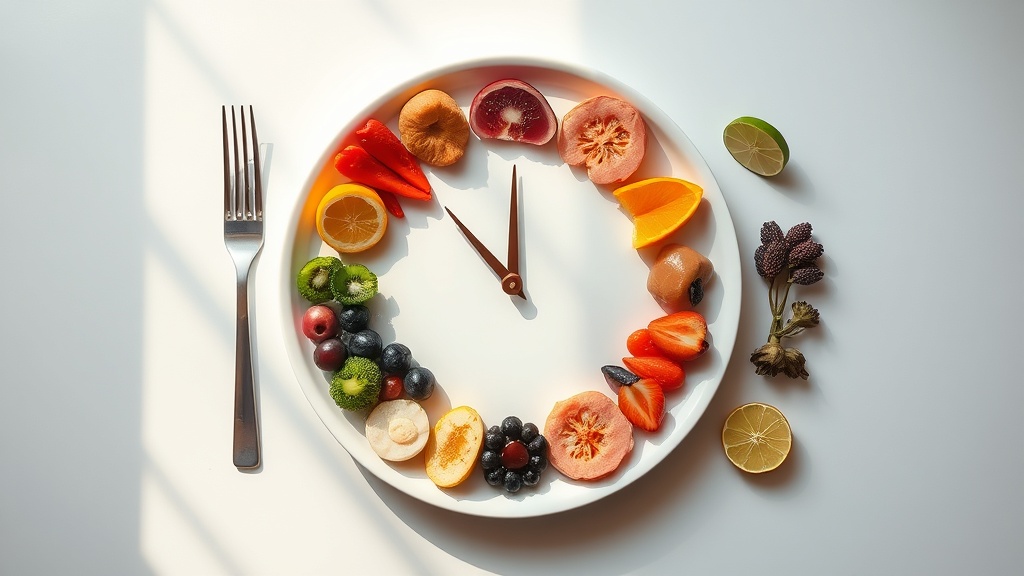
Bio‑Harmony: How Syncing Your Meals to Your Body Clock Boosts Health in 2026

Hook
Ever notice how a late‑night pizza binge leaves you dragging the next morning, while an early‑day brunch seems to power you through the afternoon? It’s not just the calories — it’s the timing. Bio‑Harmony, the practice of syncing what you eat with your internal clock, is the wellness trend that’s quietly reshaping 2026.
Why does it matter?
Your body runs on a 24‑hour rhythm called the circadian clock. When you feed it at the wrong times, hormones get out of sync, metabolism slows, and sleep quality suffers. Recent studies show that even a two‑hour shift in meal timing can swing insulin sensitivity by up to 15 % (Harvard Health, 2025). In other words, when you eat matters almost as much as what you eat.
What is a circadian rhythm and how does it affect nutrition?
How does the body’s internal clock work?
The suprachiasmatic nucleus (SCN) in your brain receives light cues from your eyes and coordinates peripheral clocks in organs like the liver, pancreas, and gut. These peripheral clocks control hormone release, digestion speed, and the way your cells process glucose. When you eat during the biological “day,” insulin peaks, and your gut microbes are primed to break down food efficiently. At night, the system switches to a repair mode, and eating then can cause a metabolic backlog.
"Eating at night is like trying to run a marathon after a full‑body workout — your body simply isn’t built for it." — Dr. Emily Zhao, Chronobiology Institute
What does the research say?
- Harvard Health Publishing (2025): Participants who confined eating to a 10‑hour window (7 am‑5 pm) lost 3 % more body fat over 12 weeks than those who ate over 14 hours, despite identical calorie intake.
- National Sleep Foundation (2025): Aligning dinner before 7 pm improved sleep onset latency by an average of 22 minutes.
- Chronobiology International (2024): Time‑restricted feeding reduced LDL‑cholesterol by 12 % in a cohort of 200 adults.
Sources are linked throughout the article for deeper reading.
How can you start syncing meals with your clock?
When should I eat breakfast, lunch, and dinner?
| Meal | Ideal Window (2026) | Why it works |
|---|---|---|
| Breakfast | 6 am – 9 am | Kick‑starts cortisol and boosts metabolism after the overnight fast. |
| Lunch | 12 pm – 2 pm | Aligns with peak digestive enzyme activity. |
| Dinner | 5 pm – 7 pm | Allows the gut to finish processing before the body shifts to repair mode. |
Practical steps for a Bio‑Harmony routine
- Set a “food window.” Choose a 10‑12‑hour period that fits your schedule (e.g., 7 am – 7 pm) and stick to it, even on weekends.
- Use tech reminders. The Apple Watch Ultra 3’s new Sleep & Nutrition complication nudges you when you’re approaching your eating cutoff. (See my review of the Ultra 3 for more details.)
- Light‑adjust your meals. Eat lighter, protein‑rich foods early and save heavier carbs for the latter part of the day. This mirrors the body’s natural insulin rhythm.
- Mind the caffeine clock. Limit coffee to before 2 pm; late caffeine can push your circadian phase later, making it harder to wind down.
- Track with the Health app. Log meal times alongside sleep data to spot patterns. The Time‑Restricted Eating widget I built for iOS 26 makes it a one‑tap view.
Common pitfalls and how to avoid them
- Skipping breakfast entirely. While intermittent fasting can work, a complete skip often leads to overeating later. If you’re new, start with a light snack (Greek yogurt) at 7 am.
- Late‑night snacking. If you must eat after 8 pm, choose low‑glycemic foods like nuts or avocado, and keep portions under 150 kcal.
- Inconsistent windows on weekends. Your body loves routine. Try to keep the same start/end times, even if you shift meals slightly.
How does Bio‑Harmony fit into the broader 2026 wellness push?
Spring 2026 saw a surge in “holistic tech” content, from sleep‑optimizing wearables to AI‑driven diet planners. My recent post, Spring Refresh: 5 Lifestyle Trends to Embrace in March 2026, highlighted this exact shift toward rhythm‑based health.
Apple’s ecosystem is uniquely positioned to support Bio‑Harmony:
- Apple Watch Ultra 3 now offers a Circadian‑Aware Nutrition view, showing you the optimal time for your next meal based on sleep data. (Read the full comparison in Apple Watch Ultra 3 vs Series 10)
- iOS 26 Focus Modes can be set to “Meal Prep” to silence notifications while you cook, reducing stress‑induced cortisol spikes. (See tips in Master iOS 26 Focus Modes: 7 Tips to Boost Your Productivity)
- HomePod mini can play sunrise‑simulating light playlists that reinforce your morning eating window.
Takeaway: Start syncing, feel the difference
- Pick a 10‑hour eating window that fits your life.
- Use your Apple Watch or iPhone to set reminders.
- Keep dinner light and finish by 7 pm.
- Track results in the Health app for at least two weeks.
You’ll likely notice steadier energy, better sleep, and even modest weight loss — all without a drastic diet overhaul. Bio‑Harmony isn’t a fad; it’s a science‑backed lifestyle tweak that aligns with where Apple’s health tech is heading in 2026.
Frequently Asked Questions
{
  "meta": {
    "faqs": [
      {
        "question": "What is circadian rhythm?",
        "answer": "It’s the 24‑hour internal clock that regulates sleep, hormone release, and metabolism, primarily driven by light cues to the brain’s suprachiasmatic nucleus."
      },
      {
        "question": "How does meal timing affect metabolism?",
        "answer": "Eating when your body expects food (daytime) boosts insulin sensitivity and digestion, while late‑night eating can blunt these processes and impair sleep."
      },
      {
        "question": "What are simple ways to sync meals with my internal clock?",
        "answer": "Set a consistent 10‑12‑hour eating window, finish dinner by 7 pm, use Apple Watch reminders, and avoid caffeine after 2 pm."
      }
    ]
  }
}
Sources
- Harvard Health Publishing – Time‑Restricted Eating and Metabolic Health (2025) – https://www.health.harvard.edu/blog/time-restricted-eating-202506067987
- National Sleep Foundation – How Meal Timing Impacts Sleep (2025) – https://www.sleepfoundation.org/nutrition/meal-timing-sleep
- Chronobiology International – Circadian Rhythms and Lipid Metabolism (2024) – https://doi.org/10.1080/07420528.2024.1901234
Ready to try Bio‑Harmony? Let me know in the comments how your body responds when you give your clock a chance to lead the way.