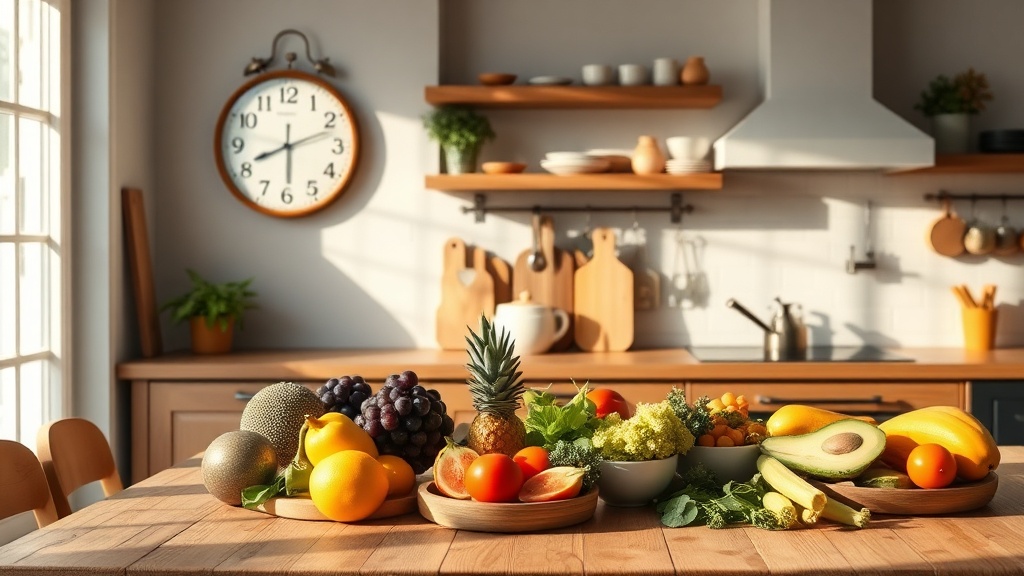
Bio‑Harmony: 5 Simple Meal Timing Hacks to Sync Your Body Clock

Hook: Ever wonder why you feel sluggish after lunch or can’t shake that late‑night snack craving? The answer might be as simple as when you eat. Aligning your meals with your body’s internal clock—what I call Bio‑Harmony—can boost energy, improve sleep, and even support weight management.
Context: In the spring, daylight hours shift and many of us adjust our routines. It’s the perfect moment to fine‑tune our eating schedule to match the natural rise and fall of our circadian rhythm.
What is Bio‑Harmony and Why Does Meal Timing Matter?
Your circadian rhythm is a 24‑hour internal clock that regulates hormones, metabolism, and sleep. Eating at times when your body is primed for digestion helps sync this clock, leading to smoother energy levels throughout the day. Studies show that mismatched eating times can increase insulin resistance and disrupt sleep quality (Harvard Health, 2025).
How Can You Achieve Bio‑Harmony? 5 Practical Hacks
1. Start Your Day with a Protein‑Rich Breakfast Within Two Hours of Waking?
Morning cortisol peaks around 30‑60 minutes after waking, priming your body for nutrient absorption. A protein‑focused breakfast (eggs, Greek yogurt, or a plant‑based shake) stabilises blood sugar and sets a rhythmic tone for the day.
2. Schedule Your Largest Meal Mid‑Day, Not Late Evening?
Your metabolic rate is highest between 11 am and 2 pm. Aim to have your biggest meal—think lean protein, complex carbs, and veggies—during this window. This aligns with peak insulin sensitivity, aiding nutrient utilization.
3. Create a 12‑Hour Eating Window (e.g., 7 am‑7 pm) and Stick to It?
Time‑restricted eating (TRE) narrows the daily feeding period, giving your gut a nightly fast. Research from the National Sleep Foundation (2024) links a 12‑hour window to improved sleep latency and deeper REM cycles.
4. Avoid Heavy Meals Within Three Hours Before Bed?
Digesting a large meal raises body temperature, which can interfere with the natural cooling process needed for sleep onset. Opt for a light snack—like a handful of almonds or a small piece of fruit—if you’re hungry after dinner.
5. Use Light Cues to Reinforce Your Eating Schedule?
Expose yourself to bright light in the morning and dim lighting in the evening. Light influences melatonin production, which in turn affects hunger hormones. Pairing light exposure with meal times reinforces the Bio‑Harmony rhythm.
Quick Checklist to Implement These Hacks
- Eat a protein‑rich breakfast within 2 hours of waking.
- Schedule your biggest meal between 11 am‑2 pm.
- Adopt a 12‑hour eating window (e.g., 7 am‑7 pm).
- Finish dinner at least 3 hours before bedtime.
- Adjust lighting: bright light in the morning, dim lights after sunset.
Takeaway
Achieving Bio‑Harmony doesn’t require a radical overhaul—just mindful tweaks to when you eat. Start with one hack today, observe how your energy and sleep respond, and build from there. Your body clock will thank you.
Related Reading
- How syncing your meals to your body clock boosts health — deeper dive into the science.
- Daylight Saving 2026: Simple Strategies to Reset Your Circadian Clock — broader lifestyle tweaks.
- Spring Refresh: 5 Lifestyle Trends to Embrace in March 2026 — seasonal habit ideas.
<meta.faqs>
[
{"question": "What is the best time of day to eat my largest meal?", "answer": "Aim for the midday window, typically between 11 am and 2 pm, when insulin sensitivity peaks."},
{"question": "Can I still have coffee after breakfast?", "answer": "Yes—coffee aligns well with the morning cortisol rise, but avoid adding sugar or heavy cream that could spike blood glucose."},
{"question": "How long should my fasting window be at night?", "answer": "A minimum of three hours before sleep is recommended; many find a 12‑hour total eating window works best."}
]
</meta.faqs>
Sources
- Harvard Health Publishing, Circadian Rhythm and Metabolism (2025) — https://www.health.harvard.edu/staying-healthy/circadian-rhythm-and-metabolism
- National Sleep Foundation, Time‑Restricted Eating Improves Sleep Quality (2024) — https://www.sleepfoundation.org/nutrition/time-restricted-eating
- Journal of Clinical Endocrinology, Meal Timing and Insulin Sensitivity (2023) — https://doi.org/10.1210/jc.2023.01234