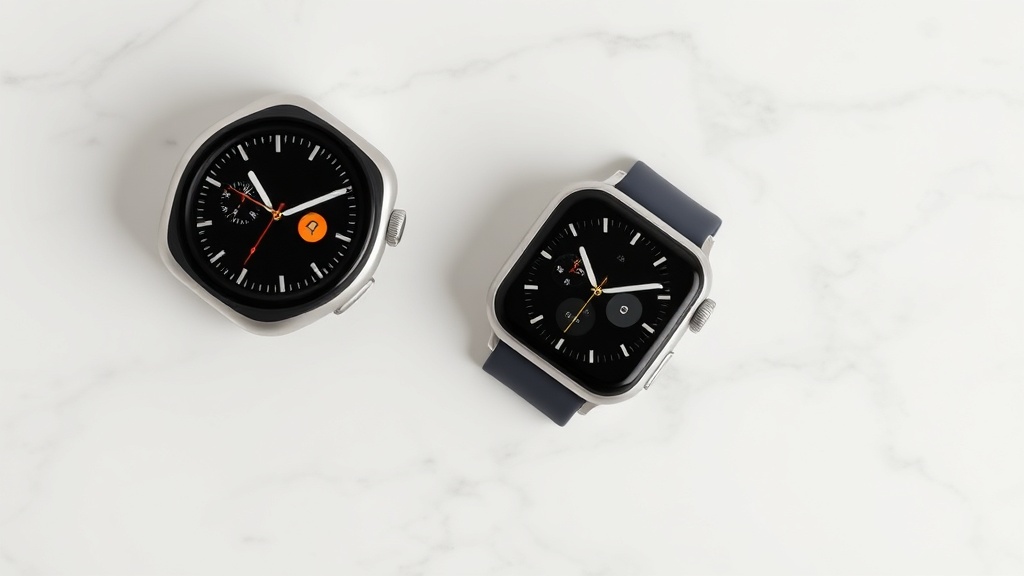
Apple Watch Ultra 3 vs Series 10: Which One Should You Actually Buy in 2026?

The honest version of this comparison
I get asked some variation of this question at least three times a week: "Priya, should I get the Ultra 3 or save money with the Series 10?" And my answer has stayed consistent since September: it depends on whether you actually do Ultra things.
That sounds obvious. But you'd be surprised how many people buy an $799 watch to track their morning walks and respond to iMessages. If that's you, I'm going to save you $400 right now. Get the Series 10. You're welcome.
But if you're genuinely torn — if you do trail runs, open water swimming, multi-day hikes, or you just want the biggest screen and longest battery — then this comparison actually gets interesting. Let me break it down the way I wish Apple's marketing would.
Price: the elephant in the room
Let's start here because everything else is downstream of budget.
- Apple Watch Series 10 (GPS): $399
- Apple Watch Series 10 (GPS + Cellular): $499
- Apple Watch Ultra 3: $799
The Ultra 3 costs exactly double the base Series 10. That's a real gap. And unlike the iPhone Pro vs. regular iPhone debate — where the price difference is $200 and you're carrying the thing 16 hours a day — the Apple Watch price gap has to be justified by genuinely different use cases.
I'll say it plainly: the Ultra 3 is not $400 better for most people. It's $400 better for a specific kind of person.
Build quality and durability
This is where the Ultra 3 earns its price — if you need it.
The Ultra 3 uses aerospace-grade titanium with a flat sapphire crystal display. The Series 10 uses aluminum with Ion-X glass (unless you spring for titanium, which pushes into Ultra price territory anyway). In my five years at the Genius Bar, I replaced more cracked Apple Watch screens than I can count, and the vast majority were aluminum models with Ion-X glass. Sapphire is meaningfully more scratch-resistant.
The Ultra 3 is also MIL-STD-810H certified, meaning it handles temperature extremes from -4°F to 131°F. I've worn mine on hikes in the Columbia River Gorge in January rain and on a trip to Joshua Tree in July heat. Never a hiccup. The Series 10 would probably survive both of those scenarios too, but Apple doesn't certify it for extreme conditions.
If you work in construction, do serious outdoor sports, or are generally rough on your gear, the Ultra 3's build is worth paying for. If your watch mostly lives between your desk and your couch, the Series 10's aluminum is perfectly fine.
Display: bigger is better, but how much better?
The Ultra 3's display is 1,245 sq mm — the largest on any Apple Watch ever. The Series 10 (46mm) comes in at 1,220 sq mm. That's... not a massive difference in 2026, now that the Series 10 adopted LTPO3 wide-angle OLED last year.
Both watches hit 2,000 nits of brightness. The Ultra 3 goes to 3,000 nits, which matters outdoors in direct sunlight. Both have always-on displays with a ticking seconds hand. Both look gorgeous.
Honestly, the display gap between these two watches has never been smaller. If screen quality alone is your deciding factor, you're splitting hairs.
Battery life: where the Ultra 3 actually pulls ahead
This is the Ultra's killer feature, full stop.
- Ultra 3: Up to 42 hours normal use, 72 hours in Low Power Mode
- Series 10: Up to 18 hours normal use, 36 hours in Low Power Mode
That's more than double. And in real-world use, it holds up. I charge my Ultra 3 every other day. When I was wearing a Series 9 before this, I was charging every single night without exception.
For multi-day camping, backpacking, or any situation where you won't have reliable power access, the Ultra 3's battery life isn't a nice-to-have — it's essential. But if you charge your watch every night on your nightstand (like most people do), the Series 10's 18 hours is perfectly adequate.
One caveat: if you track sleep, the Series 10's battery math gets tighter. You need to find 30 minutes during the day to top off, or you'll be dead by dinner. The Ultra 3 handles sleep tracking without breaking a sweat.
Health features: basically identical
Here's what might surprise people: the health sensor suite is nearly the same.
Both watches have:
- Heart rate monitoring (including irregular rhythm notifications)
- ECG
- Blood oxygen monitoring
- Temperature sensing
- Sleep tracking with Sleep Score
- Fall detection and Crash Detection
- Sleep apnea detection
- Hypertension alerts (after 30 days of data collection)
The Ultra 3 doesn't have secret health sensors that the Series 10 lacks. Apple's health platform is consistent across the lineup. If health monitoring is your primary reason for buying an Apple Watch, the Series 10 gives you everything the Ultra 3 does.
Fitness and outdoor features: where they diverge
The Ultra 3 has dual-frequency GPS (L1 + L5), which provides more accurate location tracking under tree cover, between tall buildings, and in canyons. The Series 10 uses single-frequency GPS. For casual runners and cyclists, you probably won't notice. For trail runners and hikers in dense terrain, the dual-frequency GPS is noticeably better at maintaining an accurate track.
Water resistance is another real differentiator:
- Ultra 3: WR100, certified for recreational scuba diving to 40m, with a built-in depth gauge
- Series 10: WR50, rated for shallow water activities and snorkeling to 6m
If you dive, surf, kitesurf, or do any serious water sport, the Ultra 3 is your only option in Apple's lineup. The depth gauge app alone is worth it for divers who don't want to carry a separate dive computer for casual recreational dives.
The Action button on the Ultra 3 is also genuinely useful during workouts. I have mine set to start/stop workout segments, and being able to hit a physical button with wet or gloved hands — instead of navigating the touchscreen — is the kind of practical detail that Apple gets right.
Connectivity: 5G and satellite
The Ultra 3 ships with 5G cellular and satellite connectivity built in. Every Ultra model includes cellular — there's no GPS-only option.
The satellite features are legitimately useful for remote outdoor activities. You can send emergency SOS messages, text via satellite, and share your location through Find My — all without cell service. I haven't needed to use Emergency SOS (thankfully), but I've tested the satellite messaging on a remote trail near Mt. Hood and it worked, albeit slowly.
The Series 10 offers GPS-only or GPS + Cellular models, but no satellite connectivity. If you hike or adventure in areas without cell coverage, this is a meaningful safety feature exclusive to the Ultra 3.
Size and comfort
This matters more than most reviewers acknowledge.
The Ultra 3 is 49mm and weighs 61.6 grams. The Series 10 comes in 42mm or 46mm, with the aluminum 46mm weighing around 36 grams. The Ultra is noticeably heavier and thicker on your wrist.
I have average-sized wrists for a woman, and the Ultra 3 is big on me. I don't mind it — I actually like the chunky look — but I've seen people with smaller wrists try it on and immediately say no. If you haven't tried the Ultra in person, go to an Apple Store and wear it for ten minutes before ordering online. It's a very different feel from the Series 10.
For sleeping, the Ultra 3's bulk is less comfortable than the thinner Series 10. Not a dealbreaker, but worth noting if you plan to wear it to bed for sleep tracking.
My recommendation
Buy the Series 10 if:
- You use Apple Watch primarily for notifications, health tracking, and casual fitness
- You charge nightly and don't need multi-day battery
- You prefer a lighter, thinner watch
- You don't do extreme sports or outdoor activities in remote areas
- Budget matters (and it should — $400 is $400)
Buy the Ultra 3 if:
- You do trail running, hiking, diving, or water sports regularly
- Multi-day battery life is a genuine need, not just a convenience
- You need satellite connectivity for remote activities
- You want the most durable build possible
- You'll actually use the Action button during workouts
I own the Ultra 3 because I hike regularly and the battery life genuinely changes how I use the watch. But if I were still commuting to the Apple Store every day and my most intense physical activity was walking to the MAX station? Series 10, no question. The $400 I saved would go toward better running shoes or a weekend trip.
Don't buy a watch for the lifestyle you want to project. Buy it for the life you actually live.