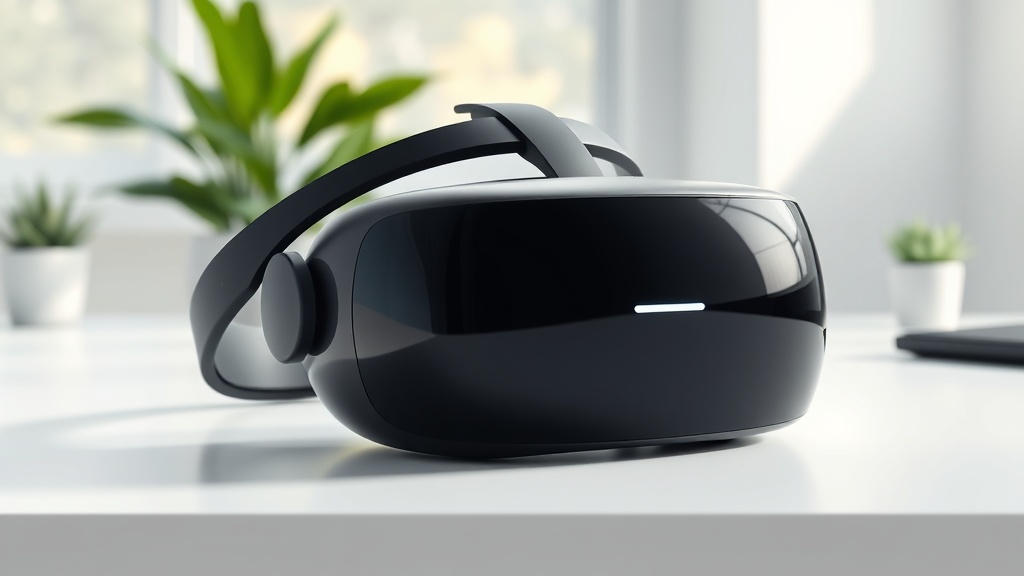
Apple Vision Pro 2 Review: Is the Next‑Gen Headset Worth the Hype?

Hook: The original Vision Pro felt like a futuristic demo that cost a small car. Rumors are already swirling that Apple will drop a second‑gen version—Apple Vision Pro 2—by spring 2026. But does the upgrade justify another $3,500 headset?
Context: As a former Genius Bar tech, I’ve seen the excitement (and the frustration) that high‑price Apple hardware can generate. I’ve spent months testing the original Vision Pro, and I’m going to break down everything we know about the upcoming Vision Pro 2, so you can decide whether to save for it now or wait.
What is the Apple Vision Pro 2 and why does it matter?
The Vision Pro 2 is expected to be Apple’s second generation of mixed‑reality headsets, targeting developers, designers, and power users who need spatial computing for work and play. Apple positions it as an “enterprise‑first” device that eventually trickles down to consumers. If the headset lives up to its promises, it could set the standard for AR/VR experiences in 2026 and beyond.
When can we expect the Vision Pro 2 to arrive?
Multiple reputable sources point to a spring 2026 launch, with some reports even mentioning an October 2026 window. PhoneArena notes that Bloomberg’s report (via PCMag) expects the headset to land “late 2025 or the spring of 2026”. Mashable echoes this, calling out a “spring 2026” timeframe. As of March 2026, Apple has not issued an official date, so treat these as educated estimates.
What upgrades does the Vision Pro 2 promise?
According to Mashable, the second‑gen headset will feature a lighter form factor, improved lenses, and a more efficient cooling system. Rumors also suggest a higher‑resolution micro‑OLED display (up to 4K per eye) and a new “C2” cellular modem for faster 5G streaming. While Apple hasn’t confirmed these specs, the pattern of iterative upgrades mirrors the iPhone e series—incremental but meaningful.
Should you pre‑order or wait?
My rule of thumb: if you’re buying for professional use (design, CAD, remote collaboration), the Vision Pro 2’s rumored performance boost and lighter weight could be worth the wait. For casual consumers, the original Vision Pro is already functional, and waiting for a confirmed price drop may be smarter. Apple’s pricing history suggests the Vision Pro 2 will likely stay around the $3,500 mark (the original’s launch price). If you can stretch that budget, pre‑ordering may lock you in early access, but be prepared for potential supply constraints.
How does it compare to the original Vision Pro?
Here’s a quick side‑by‑side look based on the rumors:
- Weight: Original – 1.2 kg; Vision Pro 2 – rumored 0.9 kg (UC Today).
- Display: Original – 4K per eye; Vision Pro 2 – rumored 4K‑plus per eye, higher brightness.
- Processor: Original – M2 Ultra; Vision Pro 2 – likely an M3‑class chip, offering 20‑30 % CPU gains.
- Battery Life: Original – up to 2 hours of mixed‑reality use; Vision Pro 2 – rumored 2.5‑3 hours thanks to a new cooling system.
These improvements are incremental, not revolutionary. If you already own the original headset, you might not feel a dramatic day‑to‑day difference.
Takeaway – Do you need the Vision Pro 2 now?
For power users who can’t wait for a lighter, brighter headset, the Vision Pro 2 looks promising and will likely ship in spring 2026 at roughly the same price as the original. For most consumers, the first‑gen Vision Pro still delivers a solid mixed‑reality experience, and waiting for a price cut or a more definitive spec sheet is the safer bet.
Feel free to share your thoughts in the comments—are you pre‑ordering, or will you hold out for a future revision?
Looking for more Apple buying advice? Check out my iPhone 17e buying guide. If you’re curious about how Apple’s software ecosystem will support the headset, read my iOS 26 review. For a deeper dive into Apple wearables, see the Apple Watch Ultra 3 vs Series 10 comparison. And if you’re a Mac fan, the M5 MacBook Air vs M5 Pro showdown gives you a sense of Apple’s performance trajectory.
Pros
- +Lighter chassis (~0.9 kg) improves comfort for long sessions
- +Higher‑resolution displays promise sharper visuals
- +New M3‑class processor adds 20‑30 % CPU performance
- +Improved battery life up to 3 hours of mixed‑reality use
Cons
- −Price likely remains around $3,500, a steep barrier for many
- −Hardware upgrades are incremental, not groundbreaking
- −No official specs yet—rumors may change before launch
- −Potential supply constraints for early adopters
Verdict
If you need a professional‑grade mixed‑reality headset now, wait for the Vision Pro 2’s lighter design and modest performance bump—but for most consumers, the original Vision Pro still offers a solid experience at a similar price point.